Endangered Animals Of Africa
 |
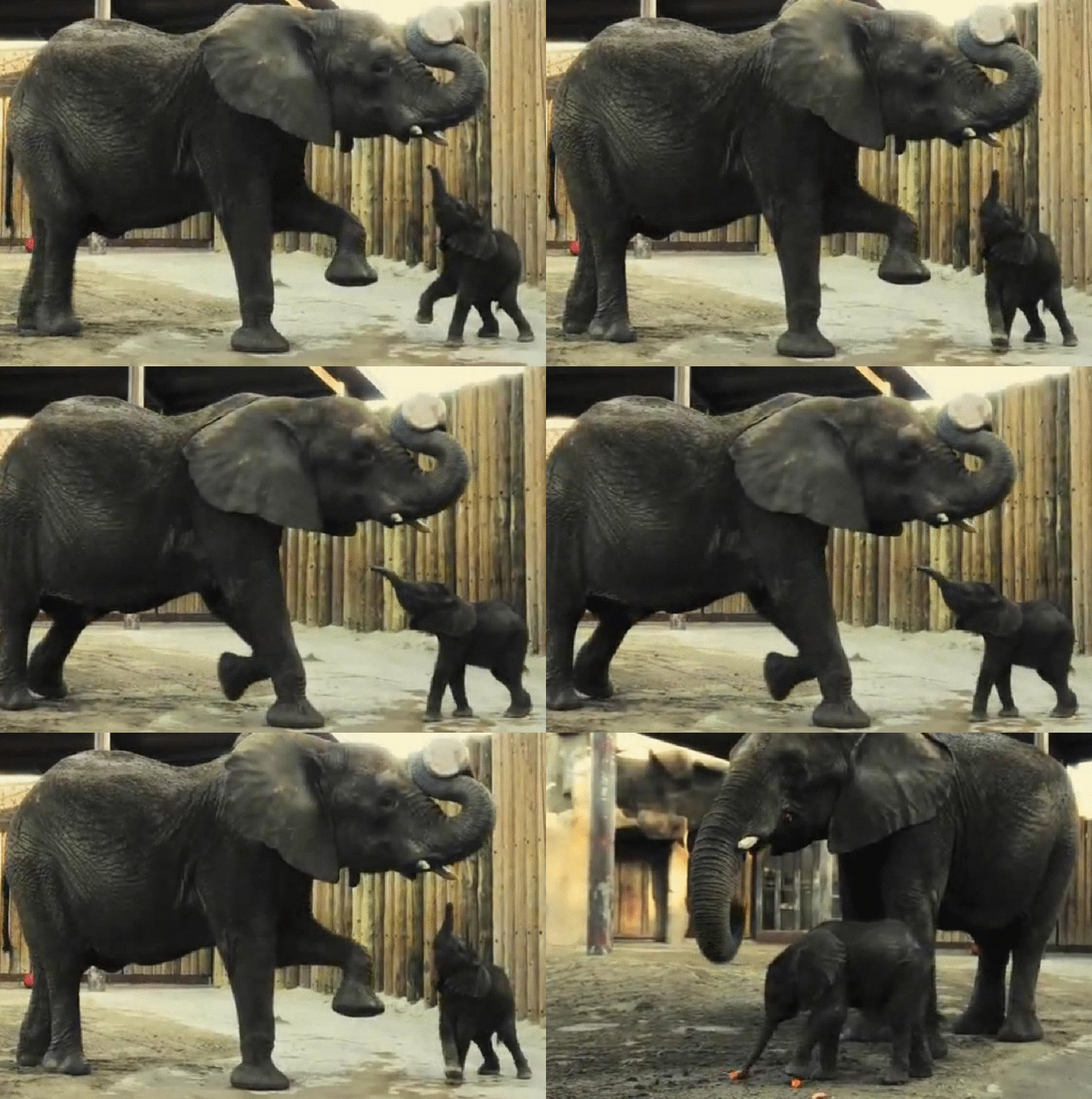
A majestic African elephant stands tall in the savanna,
its trunk raised high in the air. This iconic creature is a
symbol of strength, wisdom, and resilience. |
Endangered Species, Endangered Future: Preserving Africa's Wildlife
Discover the endangered animals of Africa and learn how you can help protect these amazing creatures from extinction. Our guide covers everything from rhinos to lions and provides actionable steps you can take to make a difference.
The wilds of Africa are home to some of the most magnificent creatures on earth, but unfortunately, many of them are endangered. From the regal African elephant to the elusive black rhino, these animals are facing significant threats to their survival. But what can we do to help? It's time to take action and raise awareness about the importance of protecting these endangered animals.
Join the fight to save the African wild dog, whose populations are dwindling due to habitat loss and disease. Or, rally behind the majestic cheetah, whose numbers are declining as their habitats are destroyed and they fall victim to poaching. And let's not forget about the gentle giants of the savannah, the giraffe, who are also facing serious threats.
Fierce and Endangered: Protecting Africa's Predators
We can all make a difference in the lives of these incredible animals by supporting conservation efforts and sustainable tourism. By booking a responsible safari, you can help protect habitats and support local communities. And, by learning more about these animals and spreading the word, we can raise awareness and work towards a brighter future for Africa's endangered species.
Let's do our part to ensure that future generations can witness the beauty and majesty of these creatures in the wild. Join the movement to protect Africa's endangered animals and make a positive impact on the world. The clock is ticking, and we must act now before it's too late.
Many parts of this planet were blessed with an abundant
flora and fauna. With mechanization and the onset of industrialization, these
born free animals and the natural vegetation stated to be depleted as a result
of human activity and what was the end phenomenon, the extinction or near
extinction of most of the animal and plant species. On the other hand, an
endangered species is any species of animal or plant threatened with extinction
as a result of the ongoing human activities to nature.
The African Safari SOS: Saving Endangered Species
Pollution and the spillover effect destruction of habitats
is the single and the greatest threat to many species around the world. Man has
overexploited many of the animal and plant species and degraded most of the
animal habitat and the ecology of many natural vegetation around the world. On
the other hand, the natural habitat
degradation due to human activities is also part of the main cause for losses
in biodiversity and may effects which results in many dangerous animal attacks.
African Wild Ass Kenya,
Ethiopia, Somalia, Sudan
African Wild Dog East Africa, West Africa, Central & South Africa
Asian elephant Sri Lanka, India,
Philippines, Malaysia, Bali,
Aye-aye Malagasy
Republic (Madagascar)
Black Rhinoceros East Africa, West Africa, Central & South Africa
Cameroon
Clawless Otter Cameroon, Nigeria
Cheetah Africa and South
Asian counties
Chimpanzee African
countries
Clarke's Gazelle Ethiopia, Somalia
and Sudan
Coquerel's Sifaka Madagascar
Cuvier's Gazelle Algeria, Morocco,
Tunisia
Dorcas Gazelle Algeria, Iraq,
Israel, Jordan, Morocco,
Somalia Dugong East Africa
Mauritius, Sri
Lanka Southern Japan
Fork-crowned Lemur Madagascar
Golden jackal Sri Lanka, Maldives,
Bhutan, Bangladesh
Hairy-eared Dwarf Lemur Madagascar
Leopard Africa,
Asia, Middle East
Malagasy Giant Jumping Rat Madagascar
Mediterranean Monk Seal Mediterranean Sea,
North African Black
Sea
Mountain Zebra Namibia, South
Africa, Angola,
Botswana
Pygmy Chimpanzee Congo
Brazzavile Democratic Republic
of Congo
Pygmy Mouse Lemur Madagascar
Red-eared Nose-spotted Monkey Cameroon,
Fernando Po, Nigeria
Rodrigues Fruit Bat Indian Ocean (Rodrigues Island)
Sand Cat Africa,
Asia, Europe, Middle East
Slender-horned Gazelle Algeria,
Egypt, Libya, Sudan
Striped Hyena Asia, Africa, and
the Middle East, Europe
Western Giant Eland Senegal,
Nigeria, Benin, Ghana, Ivory Coast
Western Lowland Gorilla Central and Western
Africa countries
White-throated Guenon Western Nigeria
Zanzibar Suni Zanzibar and pemba islands
Dangerous animals protection
As far as animal
facts and figures are concerned, statewide survey on animals conducted found
that 71% of all New York
State rescue groups
surprisingly had been turned away by many of the shelter groups and with
reasons best known to them had gone forward and killed the very same animals
they had offered to save.
"There are tens
of thousands of animals in New
York State
shelters waiting to be adopted and most are healthy, well-behaved and just in
need of a loving home," Assembly Member Kellner said. "When a humane
organization volunteers to take these animals, they should not be denied. A
shelter should work with them to the fullest extent possible. States like California and Delaware
have already passed similar legislation, and now it is time for New York to step up to
the plate."
Conservation is Cool: Helping Endangered Animals in Africa
With the advent of
time and general with many animal attacks on the rise, animal rights awareness
being on the forefront as animal safety and awareness is being achieved at a
snail speed the modern society has pondered and questions arise if there is
a future for all animal rescue,
adoption, education and protection?
Animal rescue, adoption, education and protection
As far as the media
is concerned of 19th May 20011, The Jeanne Marching Vet Training was inaugurated.
The Jeanne M Marching International Center for Animals Welfare Education was to
be part of the University of Edinburgh's Royal (Dick)School of Veterinary
study for veterinary Study.
Since its main aim of the project was to extend its
collaborate with its international partners with the aim of delivering a
wide range educational initiatives catering for different people and
cultures in different parts of the world.
Lions and Rhinos and Elephants, Oh My! Protecting Africa's Endangered Animals
With the diverse of
different animal species from different animal habitat, this initiative was geared to give
all loving animal people power to all
the veterinary students too work all
over the world as the core objective was to create and strengthen education on
animal welfare for its students and thereby creating awareness and bring about
the forum which would be geared to spear
head all animal rescue, adoption, education and protection and any other animal
related issues for the days to come.
Political debate on animal welfare and protection issues were to be part and
parcel of the centers involvement.
Africa's big five
protection a clash with African Safari
On the African
continent on Wednesday, May 18 2011, it was reported that Cattle and wildlife
clash over tourism. Tourism as far as Kenya is concerned was among the
second foreign exchange earner and for the county.
With the frequent
time to time clashes over animal habitat which had been encroached and people
property were lost and dangerous animal attacks and encounters were reported,
the sheer allure of huge incomes from tourism had created panic among livestock
farmers and traders in TaitaTaveta
County.
The Kenyan Government
schemes to set up disease free zones in the native habitat where the Masaai
live along with the Kenya big five to
boost livestock farming especially for the lucrative export market had hang in the balance as ranchers had no
alternative but to set their sights instead on the value of conservancies.
A Call to Action: Safeguarding Africa's Endangered Wildlife
The official said turning the ranches into conservancies
which to the world at large in terms of preservation of animals for the future
was to be part of the conservation of endangered species and rare species of
animals while on the contrary this would prove to be a very big blow to the
Government’s plans but if that is what the owners wanted there was very little
that could be done.
The majestic African Wild Dog only found mainly in Kenya,
Uganda, Tanzania, Sudan, Somalia, Malawi South Africa and a few other countries
in of the Sub-Saharan Africa. With very few African wild dogs remaining, these
endangered animals are protected by law and can only be hunted with special
permission. The Black Rhinoceros just as the African Rhino is considered an
endangered species and on the brink of extinction in may parts of Kenya, Tanzania, South
Africa, Namibia,
and Angola where their number used to be plenty. This dangerous animal species
has made come back thanks to the ongoing conservation in the sub Saharan Africa
and many parts of the world.
Don't Be a Stranger: Get Involved in Protecting Africa's Wildlife
With plenty of the African Cheetah research going on, the
number of cheetah in East Africa where there
is plenty of wild animals to attack and feed on, the African cheetah which is
regarded as the fastest land animal in the world is part of the endangered
species list. With little range to search for food and the demise of its
territory and reported attacks, there are cases where animal water holes have
been poisoned in order to stamp out or wipe out some of the dangerous animals
to man.
Ethiopian Wolf only found in Ethiopia
and the northern parts of Kenya
is an exotic species of its own in the Ethiopian peninsula. With less than 300
in number, the Ethiopian wolf with very huge difference unlike the snow wolf
and the ray wolf. This wolf species has undergone worse as far as its general
feeding grounds are concerned. It has managed to withstand extreme weather conditions,
diseases, and the general population as a whole.
One of the most
dangerous animals which is feared by other animals mainly for its ability to
crack bones with a single bite is no other than the Hyena. Lions, tigers, cheetahs and leopards always
fear this animal when it searches for food. As far as its cousin “The Striped Hyena” which inhabits; Asia in
areas of Pakistan, Bhutan, Africa, and the Middle East; Algeria, Arabian
Peninsula, Iraq, Israel, Jordan, Morocco, Somalia, Syria, Tunisia and many
parts of Europe is facing the same fate unless drastic actions are taken to
conserve this stripped hyena before it becomes extinct.
The Myth behind animal attack in the modern world.
Wild animals attacks
on humans by endangered animals such as
lions, tigers, elephants, alligators, crocodiles, bears, snakes, mountain lions
and all animals that are in the endangered species list have caused harm to
people, property and the environment and above all have become more common as people and animals
start sharing the same animal and human habitat.
As many people continue to occupy the animal’s world, many
animal attacks will continue to rise as both plants and animals’ environment
will continue to be destroyed from the Arctic polar bears to the dangerous poisonous
snakes of Africa and Asia. People who love
animals know what it takes to raise animals. Many animal loving people know
that animals have feelings and they need love and a family too.
When the CAARA was formed in the USA, it was geared to undertake
comprehensive measures that would go beyond giving rescue groups the access to
take care of animals. The knowledge about animals and animal health
qualifications and guidelines were it sets for both animal shelters and rescue
groups as a whole. Outlining the responsibilities of those who work directly
with the animals will help ensure that the animals receive proper care. These
provisions ensure that animals are given fresh food and water on a daily basis,
exercise and socialization with other animals, clean living environments, and
prompt veterinary care.
"Animal loving Americans would be shocked to know the
reality of what's happening in our nation's shelters– including abuse, horrific
conditions and unnecessary killings," says Debi Day, Director of No Kill
Nation.
"Most shelters are mired in the status quo and
unwilling to change, so CAARA is designed to mandate lifesaving policies at
these facilities, and ensure safety, proper care and a chance at a good home
for all shelter pets. We are thrilled that this legislation has been introduced
in New York, as well as elsewhere across the US. CAARA is a
crucial step on our road to a No Kill Nation."
Benefits of animal attacks, animal fights and mauling
Many pictures of
animals including dangerous animal attacks have been portrayed or caught on
video depicting dangerous animals
mauling people, many animal attacks indifferent parts of the world and in the
normal natural animal environment while to some extent innocent people and zoo
keepers fine themselves attacked by zoo animals.
The African animals including the big five, the great sea
animals such as the great white shark and not forgetting the Australian
dangerous crocodiles, alligators and snakes have come to the limelight of being
some of the most dangerous animals facts. The top dangerous animals have always
lived to their expectations and the same animals have now become animals in
danger.
Despite the fact that there is always awareness as to where
to get animals information, the national geographic society has done extensive
research on animals around the world. According to animal attack statistics,
it’s amazing now to see recent stories all over the world to hear animals abuse, pet attacks, and dog attacks
and recently in India
where it was caught live on video animals.
When animals attack on humans is aired on TV, this is the
time when others are inspired to make animal games while to some extent funny
animal videos which are humorous and very graphic animal pictures and animal
photos come up In the end, you find all breath taking Oscar wining animal
attack movies and armature home made animal attacks movies on you tube which
can be easily accessed.
Adapting with nature from different animal attacks.
For the scientist,
there is always a new way of finding why different animal attack takes place in
different environment whether it is a provoked attack or a nun provoked attack
the beginning. Different animal species with their evolved natural habitat and
surroundings always determine the provocation and the intent of the attack.
On the other hand, for the people who love dogs, snakes,
lions, bears, monkeys just to mention a few you get that many of them have kept them as pets while to
some its just a mere necessity as a watchdog without prior knowledge of how to
take care of dogs and other pets as well. What is the ramification, you find
that expensive unwanted dog bite lawsuits and people seeking the services of
dog bite attorneys are also on the rise.
Most government has come up with different animal attack
laws and animal attack compensation so that both the owner and the person
attacked by animals are protected by law. Should the dog be blamed for such an
animal attack just because it’s a dangerous animal, should the dog or animal
owner be punished because proper care and animal precaution and protection was
not take care of? How about people who provoke the animal both knowingly
or unknowingly.
A good guess would be many of these animal attacks are so
sudden such that there is always no time to foresee such animal encounters
until they happen. Children who are bystanders or just inquisitive to play or
the seemingly harmless dog just end up being the victim of animal attacks which
could be very fatal
In the recent news
posted on the Hindu Times dated 15th May, the Indian Government announced the
compensation to its people of all walk of life and mainly to the kin of people
killed in attacks by wild animals as there have been devastating recent incidents
which had prompted such a move for those people who are faced with permanent
disability, deaths of domestic animals and crop loss as a result of the deadly
and dangerous animal attacks which had come to be part of human rights and the
need for the protection of the same dangerous animals roaming the jungles of
Asia.
As far as the legality and the do and don’ts regarding the
compensation and payments are concerned, the Order clearly state that the
compensated amount of money will be handed over to the victims of the animal
attacks if the person or people died, or those who got permanent disability or
were injured during the event while they were in a restricted area or land
which belonged to the government while the same goes to the loss of crops and
farm animals too.
The persons killed during the animal attack incident should not have indulged in unlawful
activities in forest or restricted and protected natural habitat areas. Since
curiosity killed the cat, you get that in this world which we are living in,
survival for the fittest is always the order of the day. Man has evolved from
being a hunter and a gatherer to sophisticate all rounded egoistic being
looking for greener pastures in the rain forest, savannah, prairies and the
pampas where he is not intended to,
there by exploiting and destroying our beautiful flora and fauna.
There are numerous cases where animals have become extinct
and very rare animal species are becoming extinct due to poaching hunting, wild
fires and as a result of global warming and the loss of wild animals breeding
grounds. The ecological misbalance as a result of the food chain has districted
the natural food cycle of many of the animal species. Rare species of animals
are on the brink of being wiped out and the list of endangered species keep on
rising.
Despite the fact that there is always a very big hue and cry
from different animal rights groups and animal rescue and animal shelter groups
you find that such animal attacks take place in these localities hence a
certified medical doctor should ascertain and confirm during post-mortem that
the death was caused by a wild animal attack. With difficult scarce resources
to investigate the cause of death in many third world countries, many
incidences are not reported due to fear of being found to be the culprit or on the wrong by
the concerned agencies whereas you get that for those who are in this business,
this is the price they will always have to pay. Since man has not been able to
understand the really secrets of nature and all its wild animals mythology,
it’s the common person who ends up being devastated by wild animals.
If you find yourself being in the migratory rout of the
Canadian Bison, Kenyan wildebeest and the Indian jumbo elephant makes you prone
to animal attack. In many third world countries where majority of the
communities are agrarian nomadic pastoralists all or almost all dwellings are
not permanent houses, you find that most farmers’ dwellings offer little
protection over animal attacks. Thus you find that many people find themselves
vulnerable and if a mud or grass thatched house, animal, water shed, pump
house, pipeline or fence is damaged in a wild elephant attack, the owner will
be paid and for loss of cattle and other domestic animals too
Animal protection. A new chapter for endangered species.
Since there has been
a lot of animal protection programs in
may countries, animal parks, animal shelters and animal sanctuaries have been
able to bring all endangered and rare species loser to man.
The big question come where by are people or have people
been able to bring the same natural habitat into the zoos and animal
sanctuaries which does not affect their living space as they would have been in
the wild? These animals have now started to be on the animal watch list of
endangered species and most of the endangered animals have been bred and
released back in the nature. With the increased awareness of animal rights and
protection policies in many social institutions in many countries, many
beautiful land and sea animals like
crocodiles, foxes and monkeys in India weren’t that plenty.
As hunting and the demand for animal hides and skins and
other different animal parts just to mention a few has led to the decline of
such animal species to be wiped out. At the same time, flooding and changes in
the environment have resulted in many animals finding themselves in new animal
habitats. Are we to blame in such changes in our natural environment. Well
animals have to adapt to it as we get to know these animals as time goes by.
Changing weather conditions rise with animal attack
Despite the boom in these animals, many localities and
states continued to prevent and to label some of the animals as endangered
species. Feeding of Foxes, Coyotes, bears and wild dogs say an increase in such
animal population due to the easy availability of food which didn’t have any
competition. With the changing climate conditions, most animals have been
forces to look for water over long distances and that’s where nature collides
with man.
#endangeredanimals #Africa #conservation #wildlife #rhinos #lions #extinction #protect #vulnerablespecies #safari #savetheanimals #actnow #animalrights #wildlifeconservation #animalwelfare

.jpg)

.jpg)


